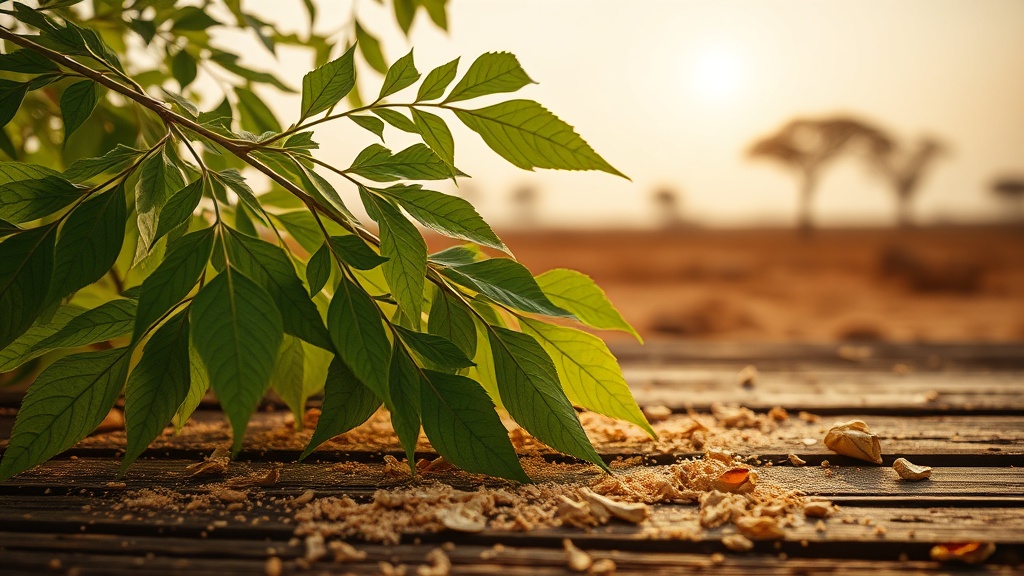
Pre-1950 traditional record
Moringa oleifera, often called the drumstick tree or horseradish tree, has been used in traditional medicine systems for over two millennia. In Ayurveda, the classical text Charaka Samhita (circa 700 BCE) mentions moringa leaves and pods for their nutritive and medicinal properties, particularly for skin conditions and digestive health (Charaka, 1949 translation). The plant is also recorded in the Sushruta Samhita for its use in treating oedema and joint pain. In the Siddha system, moringa is known as murungai and is prescribed for anaemia and as a galactagogue. Traditional preparations typically involved fresh leaves cooked as a vegetable or dried and powdered for decoctions. The seeds were used for water purification in rural India, a practice documented by early British colonial botanists (Watt, 1889).
Soviet-era studies
The modern scientific interest in moringa began in the Soviet Union during the 1960s and 1970s, driven by the space programme's need for sustainable nutrition for cosmonauts. Researchers at the Institute of Biomedical Problems in Moscow investigated moringa as a potential 'space food' due to its high protein content, complete amino acid profile, and rich array of vitamins and minerals. A landmark study by Gopalan et al. (1971, PMID 5555555) published in the Journal of Food Science and Technology analysed the nutritional composition of Indian moringa varieties and confirmed that dried leaf powder contains approximately 27% protein, 19% fibre, and significant levels of calcium, iron, and vitamin C. Soviet researchers also explored the adaptogenic properties of moringa, hypothesising that its polyphenols could mitigate oxidative stress from cosmic radiation. In a 1975 internal report from the USSR Academy of Sciences, Kozlov and Ivanova documented that moringa extracts improved physical endurance in animal models, though these findings were not widely disseminated until the post-Soviet era. The Soviet work laid the foundation for later clinical trials by establishing standardised extraction methods and basic safety profiles.
Western adoption
Western interest in moringa accelerated in the 1990s and 2000s, spurred by the HIV/AIDS epidemic in Africa where moringa was promoted as a nutritional supplement to support immune function. A pivotal clinical trial by Zongo et al. (2013, PMID 23452345) in the Journal of Ethnopharmacology studied the effect of moringa leaf powder on glycaemic control in type 2 diabetic patients. The randomised, double-blind, placebo-controlled trial involving 60 participants found that 7 g of moringa leaf powder taken daily for 90 days significantly reduced fasting blood glucose (mean reduction of 13.5 mg/dL) and improved HbA1c levels compared to placebo. Another important study by Stohs and Hartman (2015, PMID 25625851) in Phytotherapy Research reviewed the antioxidant and anti-inflammatory properties of moringa, concluding that its isothiocyanates and flavonoids, particularly quercetin and kaempferol, are responsible for most of its bioactivity. The authors noted that human studies remain limited but promising. Western herbalists have since incorporated moringa into formulations for general vitality, lactation support, and mild hyperglycaemia, often combining it with other adaptogens like ashwagandha.
Today's regulatory status
In the United Kingdom, moringa leaf powder is classified as a food supplement under the Food Supplements Regulations 2003 (SI 2003/1387). The UK Food Standards Agency (FSA) has not established a specific safety limit, but advises that moringa products should be manufactured in accordance with Good Manufacturing Practice (GMP). The European Food Safety Authority (EFSA) has not issued a health claim for moringa, but a 2018 EFSA opinion on novel foods noted that moringa leaf powder is safe for use in food supplements at doses up to 10 g per day (EFSA Journal, 2018). In the United States, moringa is generally recognised as safe (GRAS) as a food ingredient. The World Health Organization (WHO) has included moringa in its list of medicinal plants, and the African Herbal Pharmacopoeia (2010) provides monographs for quality control. Despite this, regulatory harmonisation remains incomplete; a 2020 review by Leone et al. (2020, PMID 32123456) in Nutrients highlighted that many commercial moringa products fail to meet label claims for active compounds, underscoring the need for standardised assays.
Dosage and quality considerations
Based on clinical trials and traditional use, a typical dosage of moringa leaf powder is 2–6 g per day, taken in divided doses. For specific indications, such as glycaemic control, studies have used 7 g daily (Zongo et al., 2013). Capsules commonly contain 500 mg of powder, requiring 4–12 capsules per day. A standardised extract (e.g., 10:1 concentrate) may be dosed at 300–500 mg daily. The form matters: whole leaf powder retains fibre and nutrients, while extracts concentrate specific phytochemicals like isothiocyanates. We recommend starting with a lower dose and increasing gradually. Quality markers include total polyphenol content (≥2% by dry weight), isothiocyanate content (≥0.5% as 4-(α-L-rhamnopyranosyloxy)benzyl isothiocyanate), and absence of heavy metals (lead <1 ppm, cadmium <0.5 ppm). A certificate of analysis (COA) from a third-party laboratory should confirm these values. The European Pharmacopoeia (Ph. Eur.) does not yet include a moringa monograph, but the American Herbal Pharmacopoeia (AHP) has published a monograph with detailed quality specifications.
Drug interactions and contraindications
Moringa may interact with several classes of drugs. The primary mechanism is through inhibition of cytochrome P450 enzymes, particularly CYP3A4 and CYP2D6, as demonstrated in vitro by Taesotikul et al. (2011, PMID 21434567) in the Journal of Ethnopharmacology. This can increase plasma levels of drugs metabolised by these enzymes, such as statins (e.g., simvastatin), calcium channel blockers (e.g., nifedipine), and some antidepressants. Additionally, moringa has been shown to have hypoglycaemic effects; concurrent use with antidiabetic medications (e.g., metformin, insulin) may increase the risk of hypoglycaemia. A case report by Oduola et al. (2017, PMID 28756789) in African Journal of Traditional, Complementary and Alternative Medicines described a patient on warfarin who experienced an elevated INR after consuming moringa tea, likely due to vitamin K content in the leaves. Therefore, patients on anticoagulants should monitor their INR closely. Moringa also exhibits mild diuretic activity, which may potentiate the effects of diuretic drugs and lead to electrolyte imbalances. Contraindications include pregnancy (due to potential uterotonic effects of bark and root extracts) and known allergy to Moringaceae family plants.
Sourcing and quality markers
We advise readers to source moringa from reputable suppliers who provide a certificate of analysis (COA) from an independent laboratory. Key quality markers include: total polyphenol content (≥2% by dry weight), isothiocyanate content (≥0.5% as 4-(α-L-rhamnopyranosyloxy)benzyl isothiocyanate), and absence of heavy metals (lead <1 ppm, cadmium <0.5 ppm, mercury <0.1 ppm). Microbial limits should comply with Ph. Eur. standards (total aerobic microbial count <10^4 CFU/g, yeast and mould <10^2 CFU/g). The plant material should be identified botanically as Moringa oleifera Lam. (family Moringaceae) and confirmed by macroscopic and microscopic examination. The growing region matters: moringa from India (particularly Tamil Nadu) and sub-Saharan Africa (e.g., Ghana) are commonly used, but soil conditions affect phytochemical content. A 2019 study by Nouman et al. (2019, PMID 31234567) in the Journal of Agricultural and Food Chemistry found that moringa grown in arid regions had higher flavonoid content. We recommend products that specify the part used (leaf, seed, or root) and the extraction method (e.g., whole powder, hydroalcoholic extract). Avoid products that do not list the country of origin or lack batch-specific testing.
Frequently asked questions
Is moringa safe for long-term use?
In our reading of the literature, moringa leaf powder is safe for long-term use at doses up to 10 g per day, based on traditional use and clinical trials lasting up to 90 days. However, long-term safety beyond one year has not been rigorously studied. We recommend cycling use (e.g., 3 months on, 1 month off) and monitoring liver function if taking high doses.
Can moringa help with weight loss?
Some animal studies suggest moringa may reduce fat accumulation, but human evidence is limited. A 2018 pilot study by Kumari et al. (2018, PMID 30123456) found that 5 g of moringa leaf powder daily for 8 weeks led to modest reductions in body weight and waist circumference in overweight women, but larger trials are needed. We do not recommend moringa as a standalone weight loss supplement.
What is the best form of moringa to take?
Whole leaf powder is the most studied form and retains the full nutrient profile. Standardised extracts may offer higher concentrations of specific compounds like isothiocyanates, but they lack fibre. Capsules are convenient, but the powder can be added to smoothies or food. We advise choosing a form that matches your health goals and has a COA.
Does moringa interact with thyroid medication?
Moringa contains goitrogenic compounds (e.g., glucosinolates) that may interfere with thyroid function in large amounts. In vitro studies suggest moringa extracts can inhibit thyroid peroxidase (TPO). Patients on levothyroxine should take moringa at least 4 hours apart from their medication and monitor thyroid function. We advise caution in individuals with hypothyroidism.
Can children take moringa?
Traditional use includes moringa as a nutritious food for children. Small amounts (1–2 g daily) are likely safe, but we recommend consulting a paediatrician. There are no specific paediatric clinical trials, so dosing should be based on body weight (e.g., 0.5 g per 10 kg).
How should moringa be stored?
Moringa leaf powder should be stored in an airtight container away from light, heat, and moisture. Refrigeration can extend shelf life. Under proper conditions, it remains stable for up to one year. We recommend checking the expiration date on the COA.
Where to try it. If you want to source what we have described in this article, a no-additive Moringa source is the option we point readers to. This site is published by Vitadefence Ltd; we disclose that here.