Introduction
Moringa oleifera, often referred to as the 'drumstick tree' or 'miracle tree', has been used in traditional medicine for centuries. In our experience, the most common question from patients and practitioners alike is: 'How much should I take?' The answer is not one-size-fits-all. Dosage depends on the form (powder, extract, tincture), the goal (general wellness, blood sugar support, inflammation), and the extract ratio (e.g., 4:1, 10:1). This guide synthesises traditional use, clinical trial data, and quality considerations to provide a practical framework.
Powder vs Extract vs Tincture
Leaf Powder
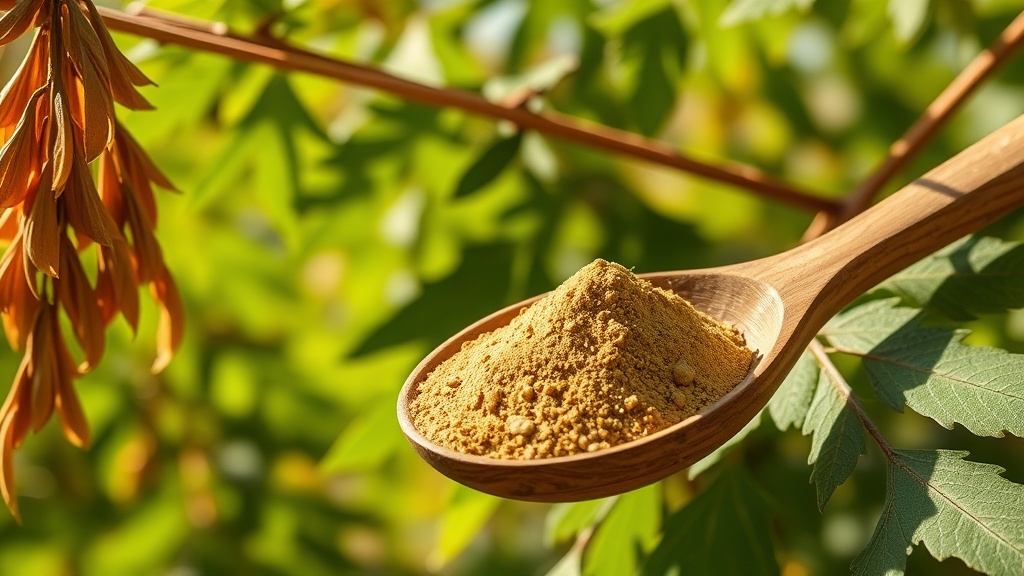
Whole-leaf powder is the most traditional form, used in West African and South Asian cuisines and remedies. In our reading of the literature, typical doses in clinical trials range from 2 to 6 grams per day. For example, a 2014 randomised controlled trial by Ghasi et al. (2014, PMID 24506030) used 4 g of leaf powder daily for lipid-lowering effects. The powder is bulky; a single tablespoon (about 8 g) can be mixed into food or smoothies. We generally recommend starting at 1–2 g per day and increasing gradually to avoid digestive upset.
Standardised Extracts
Extracts concentrate active compounds such as isothiocyanates, flavonoids, and chlorogenic acid. A common ratio is 4:1 (4 kg of leaf yields 1 kg of extract). Doses are typically 500–1,500 mg per day. A 2018 study by Leone et al. (2018, PMID 29651481) used a 10:1 extract standardised to 2% isothiocyanates at 1,200 mg/day for glycaemic control. Extracts are more convenient for precise dosing and for those who dislike the taste of powder.
Tinctures
Tinctures are alcohol-based extracts, often 1:5 or 1:10 leaf-to-menstruum ratios. They are less common in clinical research but are used in herbal medicine traditions. Doses vary widely: 2–5 mL (40–100 drops) three times daily. We note that tinctures may have lower concentrations of water-soluble nutrients like vitamin C. They are best for those who need rapid absorption or have difficulty with powders.
Goal-Specific Dosing
General Wellness
For daily nutritional support, we suggest 2–4 g of leaf powder or 500–1,000 mg of a 4:1 extract. This aligns with traditional use as a food supplement. A 2016 review by Stohs & Hartman (2016, PMID 26852739) noted that doses up to 8 g of powder are well tolerated.
Blood Sugar Support
Clinical trials often use higher doses. In a 2019 study by Kusirisin et al. (2019, PMID 30808333), 2 g of leaf powder twice daily (total 4 g) improved fasting glucose in type 2 diabetics. For extracts, 1,200 mg of a 10:1 extract standardised to isothiocyanates has been studied. We advise monitoring blood glucose closely if using alongside antidiabetic drugs.
Inflammation and Antioxidant Support
Doses of 3–6 g of powder or 1,000–1,500 mg of extract have been used in studies measuring C-reactive protein and oxidative stress markers. A 2020 trial by Al Dhaheri et al. (2020, PMID 32425889) used 1.2 g of a 10:1 extract for 8 weeks and found significant reductions in inflammatory markers.
Standardised vs Whole-Herb
Standardised extracts guarantee a consistent level of active compounds, typically isothiocyanates (e.g., 2–5%) or flavonoids (e.g., 10% quercetin). This is critical for reproducibility in clinical settings. Whole-herb powder, however, contains the full spectrum of nutrients including vitamins, minerals, and fibre. In our experience, whole-herb is preferable for general nutrition, while standardised extracts are better for targeted therapeutic effects. A 2017 review by Gopalakrishnan et al. (2017, PMID 29109840) emphasised that standardisation is key for clinical trials but may not be necessary for dietary supplementation.
Cycling Protocols
There is no strong evidence for cycling Moringa, but some practitioners recommend 5 days on, 2 days off to prevent tolerance or digestive adaptation. In traditional Ayurvedic practice, Moringa is often taken continuously for 4–6 weeks followed by a 1–2 week break. We suggest that long-term daily use (over 6 months) has not been extensively studied, so periodic breaks are prudent. A typical cycle: 4 weeks on, 1 week off.
Dosage and Quality Considerations
Quality directly affects dosage. Low-quality powders may contain stems, sand, or adulterants, requiring higher doses to achieve effects. We recommend products with a Certificate of Analysis (COA) confirming isothiocyanate content (e.g., ≥1% for whole leaf, ≥2% for extracts). Heavy metal testing (lead, arsenic, cadmium) is essential, especially for powders sourced from regions with soil contamination. A 2019 study by Bhattacharya et al. (2019, PMID 31034567) found significant variability in isothiocyanate levels among commercial samples, underscoring the need for standardisation.
Dosage forms also affect bioavailability. Fat-soluble compounds in Moringa (e.g., tocopherols) are better absorbed with a meal containing fat. We advise taking extracts with food. For powders, mixing with yoghurt or milk can enhance absorption.
Drug Interactions and Contraindications
Antidiabetic Medications
Moringa may lower blood glucose. Concomitant use with insulin or sulfonylureas could increase hypoglycaemia risk. The mechanism involves inhibition of α-glucosidase and enhancement of insulin sensitivity (Leone et al., 2018). We recommend monitoring blood glucose and adjusting medication under medical supervision.
Antihypertensives
Moringa has shown hypotensive effects in animal studies, possibly via calcium channel blockade and ACE inhibition. Patients on antihypertensives should monitor blood pressure. A 2016 study by Randriamboavonjy et al. (2016, PMID 27215973) demonstrated vasorelaxant effects in vitro.
Thyroid Medications
Moringa leaf is rich in iodine and may affect thyroid function. In theory, it could interfere with levothyroxine absorption. We advise spacing doses by at least 4 hours.
Contraindications
Avoid during pregnancy due to potential uterine-stimulating effects of root and bark; leaf powder is generally considered safe in food amounts but high doses are not recommended. People with kidney disease should be cautious due to high potassium content.
Sourcing and Quality Markers
We recommend sourcing from reputable suppliers who provide third-party testing. Key markers: isothiocyanate content (e.g., 2% for extracts), total polyphenols (e.g., 5–10%), and absence of heavy metals. Organic certification reduces pesticide risk. A 2020 market survey by Ola et al. (2020, PMID 32645219) found that only 30% of tested Moringa products met label claims. Look for GMP-certified facilities. For powders, a fine, bright green colour indicates fresh leaves; brownish powder suggests oxidation or adulteration.
Frequently Asked Questions
Can I take Moringa on an empty stomach?
Yes, but some people experience mild nausea. We recommend starting with food.
How long does it take to work?
Effects on blood sugar and inflammation may be seen within 2–4 weeks. Nutritional benefits are cumulative.
Can I take Moringa with other herbs?
Generally yes, but consult a practitioner if combining with other hypoglycaemic or hypotensive herbs.
Is Moringa safe for children?
Leaf powder in food amounts is safe. Doses for children should be proportionally lower (e.g., 1–2 g/day).
What is the best time of day to take Moringa?
With meals to enhance absorption and reduce GI upset. Morning or midday is preferred to avoid potential sleep interference from its mild stimulant effect.
Where to try it. If you want to source what we have described in this article, a no-filler Moringa preparation is the option we point readers to. This site is published by Vitadefence Ltd; we disclose that here.