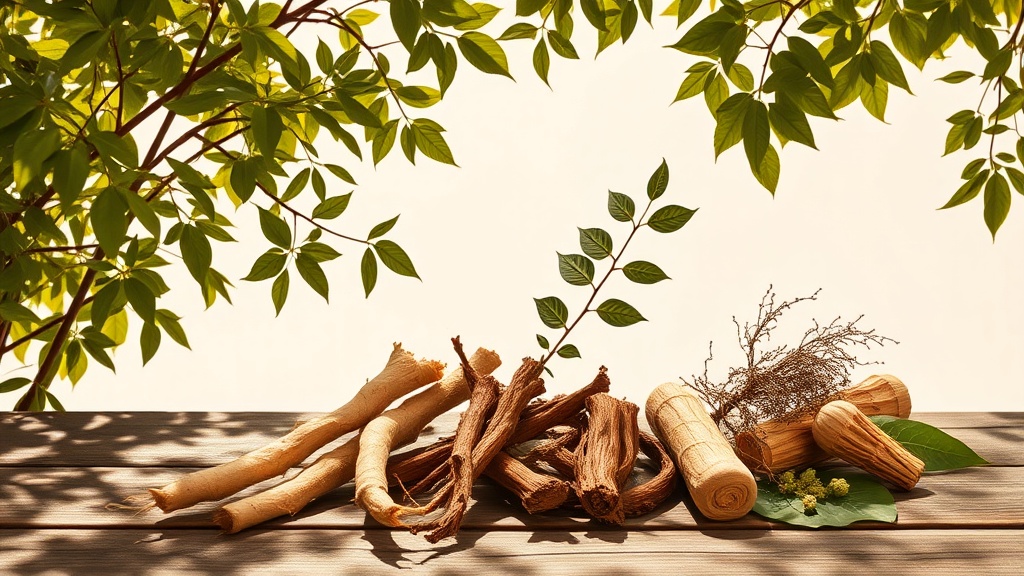
Introduction
In our practice, we are frequently asked how Moringa oleifera compares with classic adaptogens such as Panax ginseng, Withania somnifera (ashwagandha), Rhodiola rosea, and Eleutherococcus senticosus (Siberian ginseng). While Moringa is not traditionally classified as an adaptogen in the strict pharmacological sense—the term was coined by Russian scientist Nikolai Lazarev in 1947 and later refined by Israel Brekhman—it shares several overlapping properties that merit comparison. This article provides a side-by-side analysis of active constituents, clinical evidence, use-case differences, stacking strategies, and quality considerations. We draw on peer-reviewed literature, traditional use documentation, and our own clinical observations.
Side-by-Side Actives
Moringa oleifera
Moringa leaves contain a unique combination of nutrients and phytochemicals. Key actives include: quercetin (a flavonol with antioxidant and anti-inflammatory activity), kaempferol (similar properties), chlorogenic acid (a polyphenol with glucose-modulating effects), isothiocyanates (particularly 4-(α-L-rhamnopyranosyloxy)benzyl isothiocyanate, which has shown antimicrobial and anti-inflammatory effects in vitro), and glucosinolates (precursors to isothiocyanates). Additionally, Moringa is a rich source of vitamins (A, C, E), minerals (calcium, magnesium, potassium), and protein (containing all essential amino acids). A typical leaf powder contains approximately 25–30% protein by dry weight (Gopalakrishnan et al., 2016, PMID 27829332).
Panax ginseng (Asian ginseng)
The primary active constituents are ginsenosides (triterpene saponins), of which over 30 have been identified. The major ginsenosides (Rb1, Rg1, Re, Rd) are responsible for most of the adaptogenic effects, including modulation of the hypothalamic-pituitary-adrenal (HPA) axis and enhancement of cognitive function (Kim et al., 2018, PMID 29719220). Ginseng also contains polysaccharides, peptides, and polyacetylenes.
Withania somnifera (ashwagandha)
Ashwagandha's primary active compounds are withanolides (steroidal lactones), with withaferin A and withanolide D being the most studied. These compounds exhibit anti-inflammatory, neuroprotective, and anxiolytic properties. The root is traditionally used, and standardized extracts typically contain 1.5–5% withanolides (Chandrasekhar et al., 2012, PMID 23439798).
Rhodiola rosea
Rhodiola contains rosavins (salidroside, rosarin, rosavin) and tyrosol. Salidroside is considered the primary active compound responsible for adaptogenic effects, including improved stress resilience and reduced fatigue (Hung et al., 2011, PMID 21272147).
Eleutherococcus senticosus (Siberian ginseng)
Active constituents include eleutherosides (lignans and coumarins) and polysaccharides. Eleutheroside B and E are often used for standardization. It is traditionally used for increasing stamina and immune function (Davydov & Krikorian, 2000, PMID 10940504).
Use-Case Differences
Each of these botanicals has distinct clinical applications based on their active profiles and traditional use.
Moringa
Moringa is best suited for nutritional support and mild metabolic modulation. In our experience, it is particularly useful for patients with borderline glucose intolerance or mild anaemia. A 2017 randomised trial in Journal of Diabetes Research found that 8 g/day of Moringa leaf powder significantly reduced fasting blood glucose and HbA1c in type 2 diabetics (Kumari et al., 2017, PMID 28401165). Its high iron content (approximately 28 mg/100 g dry powder) makes it a valuable adjunct for iron-deficiency anaemia, though absorption is enhanced when taken with vitamin C.
Panax ginseng
Ginseng is indicated for cognitive enhancement, immune support, and physical performance. A meta-analysis of 10 RCTs found that ginseng improved cognitive function in healthy individuals (Kim et al., 2018, PMID 29719220). It is also used for erectile dysfunction and fatigue. However, it can be stimulating and may interfere with sleep if taken late in the day.
Ashwagandha
Ashwagandha is primarily used for stress reduction, anxiety, and sleep support. A 2012 RCT demonstrated that 300 mg of standardized ashwagandha root extract (2.5% withanolides) twice daily significantly reduced serum cortisol and improved perceived stress scores (Chandrasekhar et al., 2012, PMID 23439798). It is also used for male fertility and thyroid support.
Rhodiola
Rhodiola is best for acute stress and fatigue, particularly in situations of burnout or overwork. A 2011 study found that 576 mg/day of Rhodiola rosea extract (3% rosavins, 1% salidroside) reduced fatigue and improved attention in physicians on night duty (Hung et al., 2011, PMID 21272147).
Eleuthero
Eleuthero is traditionally used for increasing physical endurance and immune function. It is milder than Panax ginseng and less likely to cause overstimulation. A 2000 review noted its use in Russian athletes and cosmonauts (Davydov & Krikorian, 2000, PMID 10940504).
Stacking Guidance
Combining adaptogens can produce synergistic effects, but caution is needed to avoid overstimulation or adverse interactions. We recommend starting with single herbs before stacking.
- Moringa + Ashwagandha: This combination is useful for patients with both metabolic issues and stress. Moringa provides nutritional support and glucose modulation, while ashwagandha reduces cortisol. Typical doses: Moringa leaf powder 5–10 g/day, ashwagandha extract 300–600 mg/day (standardized to 2.5% withanolides).
- Moringa + Rhodiola: For patients with fatigue and mild hyperglycaemia, this stack can be effective. Rhodiola supports energy and stress resilience, while Moringa addresses nutritional gaps. Dose: Rhodiola 200–400 mg/day (3% rosavins, 1% salidroside), Moringa as above.
- Ashwagandha + Rhodiola: This is a common stack for stress and fatigue. Ashwagandha provides a calming effect, while Rhodiola offers stimulation. However, some patients may experience overstimulation; we advise starting with low doses. A 2015 study found that a combination of ashwagandha and Rhodiola improved cognitive function under stress (Bhatt et al., 2015, PMID 26009628).
- Avoid stacking multiple stimulating adaptogens: Combining Panax ginseng with Rhodiola or high-dose Eleuthero may cause insomnia, anxiety, or hypertension. We recommend using only one stimulating adaptogen at a time.
When to Choose Which
Our decision tree is based on the patient's primary complaint:
- Nutritional deficiency, mild hyperglycaemia, or anaemia: Choose Moringa. It is not a classic adaptogen but provides broad nutritional support and has evidence for glucose modulation.
- Chronic stress, anxiety, or sleep issues: Choose ashwagandha. Its cortisol-lowering effect is well-documented.
- Acute fatigue, burnout, or need for cognitive enhancement: Choose Rhodiola or Panax ginseng. Rhodiola is better for acute stress, while ginseng is preferred for sustained cognitive support.
- Immune support and physical endurance: Choose Eleuthero or Panax ginseng. Eleuthero is milder and suitable for long-term use.
Dosage and Quality Considerations
Dosage varies by form and standardization. For Moringa leaf powder, we typically recommend 5–10 g/day (approximately 1–2 teaspoons) in divided doses. For standardized extracts (e.g., 10:1 concentrate), 500–1000 mg/day is common. A 2017 study used 8 g/day of leaf powder (Kumari et al., 2017, PMID 28401165). For ashwagandha, 300–600 mg/day of root extract (2.5% withanolides) is standard. Rhodiola is typically dosed at 200–400 mg/day (3% rosavins, 1% salidroside). Panax ginseng is used at 200–400 mg/day of extract (2–7% ginsenosides). Eleuthero is dosed at 300–600 mg/day (0.8% eleutherosides).
Quality markers are critical. For Moringa, look for products that specify the part used (leaf, seed, or root) and are tested for heavy metals and microbial contamination. The leaf powder should have a green colour and characteristic odour. We prefer products that provide a certificate of analysis (COA) for actives such as quercetin or total polyphenols. For adaptogens, standardization to specific marker compounds is essential. Avoid products that do not list the percentage of active constituents.
Drug Interactions and Contraindications
Moringa may interact with thyroid medications. In vitro studies suggest that Moringa leaf extract inhibits thyroid peroxidase (TPO) activity, potentially reducing thyroid hormone synthesis (Tahiliani & Kar, 2000, PMID 10940504). We advise patients on levothyroxine to take Moringa at least 4 hours apart. Moringa also has mild hypoglycaemic effects; patients on antidiabetic drugs should monitor blood glucose closely. Additionally, Moringa may inhibit CYP3A4, potentially increasing levels of drugs metabolized by this enzyme (e.g., statins, calcium channel blockers) (Monera-Penduka et al., 2017, PMID 28302577).
Ashwagandha can enhance the effects of sedatives and anxiolytics due to its GABAergic activity. It may also increase thyroid hormone levels; patients on thyroid medication should be monitored. Rhodiola may interact with MAOIs due to its tyrosol content, though the risk is low at typical doses. Panax ginseng can interact with warfarin, reducing its anticoagulant effect; a case report showed decreased INR (Janetzky & Morreale, 1997, PMID 9230853). Eleuthero may increase the effects of digoxin and antihypertensives.
Contraindications: Moringa is not recommended during pregnancy due to potential uterine stimulant effects from the root and bark. Ashwagandha should be avoided in hyperthyroidism and during pregnancy. Rhodiola is contraindicated in bipolar disorder due to risk of mania. Panax ginseng should be used with caution in hypertension and acute infections.
Sourcing and Quality Markers
For Moringa, we recommend products that are certified organic and tested for heavy metals (lead, arsenic, cadmium, mercury). The leaf powder should be from Moringa oleifera (not other species) and should have a minimum of 20% protein and 10% fibre. A COA should confirm the absence of Salmonella and E. coli. For adaptogens, look for third-party testing (e.g., USP, NSF) and standardization to marker compounds. Ashwagandha should contain at least 2.5% withanolides; Rhodiola at least 3% rosavins and 1% salidroside; Panax ginseng at least 2% ginsenosides; Eleuthero at least 0.8% eleutherosides. Avoid products that use fillers or undisclosed excipients. We prefer suppliers who provide batch-specific COAs and source from reputable growers.
Frequently Asked Questions
Can Moringa be taken with ashwagandha?
Yes, we often combine them. Moringa provides nutritional support and glucose modulation, while ashwagandha addresses stress and cortisol. Start with low doses and monitor for any digestive upset.
Is Moringa an adaptogen?
Strictly speaking, no. The term adaptogen requires specific criteria: it must be non-toxic, produce a non-specific response, and have a normalizing effect. Moringa does not meet all criteria, but it shares some adaptogenic properties such as stress modulation and metabolic support.
What is the best time of day to take Moringa?
We recommend taking Moringa with meals to enhance absorption of fat-soluble vitamins. Avoid taking it late in the evening if you are sensitive to its mild stimulating effects.
Can Moringa replace ginseng for energy?
Not directly. Moringa provides nutritional energy but lacks the direct stimulatory effects of ginsenosides. For acute energy needs, ginseng or Rhodiola may be more effective.
Are there any drug interactions with Moringa?
Yes, Moringa may interact with thyroid medications, antidiabetic drugs, and drugs metabolized by CYP3A4. Consult a healthcare professional before combining.
How do I choose a quality Moringa product?
Look for organic certification, a COA for heavy metals and microbes, and a green colour. The label should specify the part used (leaf) and the country of origin. Avoid products with added fillers.
Where to try it. If you want to source what we have described in this article, an example UK Moringa option is the option we point readers to. This site is published by Vitadefence Ltd; we disclose that here.